
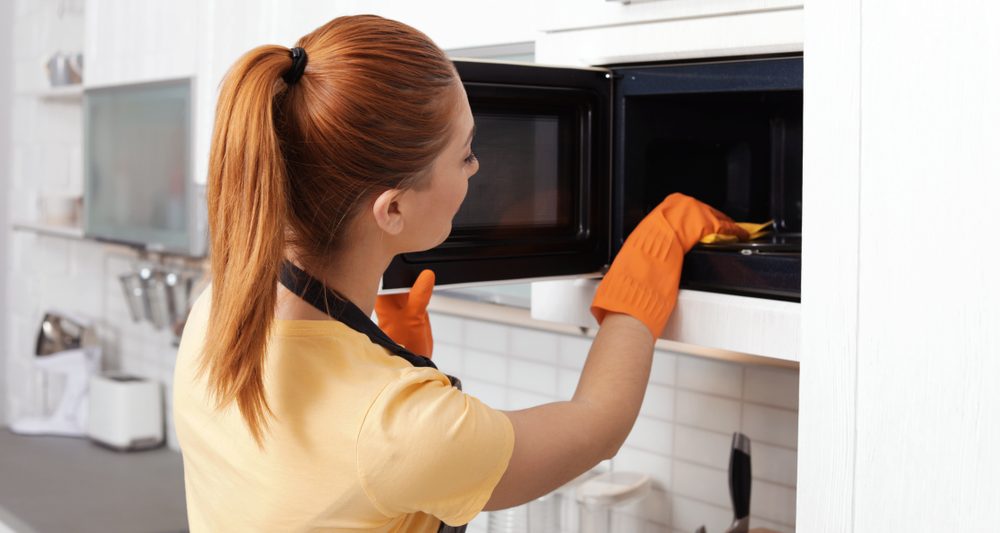
Learn how to clean a microwave the right way. Avoid heavy scrubbing and easily clean your microwave with natural methods such as: steam cleaning, lemon cleaning and baking soda.
Table of Contents
How to clean a Microwave: The Steam Power Method
- Unplug the microwave before cleaning to prevent electrical accidents and ensure a safe cleaning process.
- Pour 1 cup of white vinegar into a microwave-safe glass bowl to create a natural cleaning solution.
- Using steam with a mild acidic ingredient such as a vinegar and water solution efficiently tackles grime and odors without the use of harsh chemicals, offering an eco-friendly approach to microwave cleaning.
- Stay nearby the microwave to prevent the vinegar solution from boiling over during the steaming process.
Crafting the Vinegar Mixture
- Directions for creating a vinegar solution call for a microwave safe bowl to mix the ingredients.
- The ratio of water to distilled white vinegar for the cleaning solution should be equal parts.
- Mix one cup of water with one cup of vinegar in the bowl to prepare the cleaning mixture.
- The vinegar mixture is a straightforward and effective solution for cleaning microwaves.
The Steaming Process
- Heat the vinegar and water mixture in the microwave for up to four minutes to create ample steam for cleaning.
- Use protective gloves and heat-resistant tools when handling the hot bowl after steaming to prevent burns and ensure safety.
Wipe Down After Steam
- Use oven mitts or pot holders to safely remove the hot bowl from the microwave.
- After removing the bowl, wipe the microwave interior with a damp cloth to clean off loosened grime and food particles.
- Dry all the cleaned surfaces with a clean microfibre cloth before putting back any removable items.

How to clean a Microwave – Citrus Clean: Lemon as a Natural Cleanser
- Citric acid in lemons is a natural and powerful cleaner, capable of breaking down grime and weakening bonds between dirt particles and surfaces.
- A natural cleaning solution for microwaves includes lemon, which can be used as part of the ingredients for the lemon clean method.
- Cut a lemon in half, place it cut side down on a microwaveable plate with a few teaspoons of water, microwave until steam is produced, then remove the plate to wipe the interior with the generated lemon steam.
Preparing Lemon Water Solution
- A deep microwave-safe container or bowl is needed to prepare the lemon water solution.
- One cup of water should be added to the microwave-safe container to create the base for the lemon water solution.
- Lemon juice should be squeezed from one whole lemon into the bowl of water for the solution.
- After squeezing the lemon, drop the lemon halves into the bowl to enhance the solution’s cleaning power.
Boiling and Cleaning with Lemon Steam
- Prior to heating, a lemon water solution is prepared for the microwave cleaning process.
- The lemon water solution should be microwaved on high until it reaches a boiling state to generate steam—commonly for about three to five minutes.
- Once the lemon water has boiled, steam is released which helps to soften and loosen the grime and food residues inside the microwave.
- To maximise softening and loosening of microwave stains and grease, the steam should be allowed to settle for approximately 15 minutes after the solution has been heated.
Finishing Touches with a Soft Cloth
- Using a damp cloth to wipe the interior of the microwave after steaming will effectively remove loosened grime.
- Wiping the microwave with a damp cloth following the steaming process helps to remove any remaining spots and sanitizes the surface.
How to clean a Microwave: Tackling Tough Spots with Baking Soda
- Make a non-abrasive paste by mixing baking soda with water to create a suitable cleaning agent for the microwave.
- Apply the baking soda paste directly onto the tough spots and let it sit to break down the build-up before scrubbing.
- After allowing the paste to sit, gently scrub the area using a non-scratch sponge to avoid damaging the microwave’s interior surfaces.
- Baking soda paste effectively tackles heavy grease build up and hardened food remnants, enabling an easy wipe-off without scratching the microwave’s surfaces.
Mixing Baking Soda Paste
- Baking soda paste is created specifically for cleaning applications in the microwave where tough spots need to be addressed without scratching surfaces.
- To create an effective baking soda paste, the recommended ratio is approximately two parts baking soda to one part water.
- The paste should achieve a spreadable consistency that allows it to cling to surfaces for targeted cleaning.
- Combine the baking soda and water by mixing them together until the desired paste-like texture is attained.
Applying Paste and Scrubbing
- After mixing, the baking soda paste should be spread evenly over the stains or on the interior walls of the microwave for targeted cleaning.
- Once the paste is applied, it is essential to let it sit for five minutes to penetrate and loosen the grime.
- Lightly scrub the areas where the paste was applied using a non-abrasive pad or sponge to prevent scratching the microwave’s interior.
- Always use a microwave-safe cleaning tool, such as a non-scratch pad or sponge, to avoid potential damage to the microwave.
Rinsing Off Residue
- The baking soda residue should be wiped from the microwave using a cloth moistened with hot water.
- For thorough removal, the cloth should be regularly rinsed with hot water during the cleaning process.
- Once the residue is completely removed, the microwave interior should be dried with a clean towel to prevent water marks.
Daily Maintenance and Odor Removal
- Cleaning your microwave every few days or immediately after spills can extend the appliance’s life and improve kitchen hygiene.
- Daily microwave maintenance involves covering food during heating to minimise splatters, wiping down the interior regularly, especially after cooking steamy foods, and avoiding microwaving items that could leave persistent odors or grease.
- Natural methods to remove odors include using a mixture of water and vanilla extract sprayed on a cloth for wiping the microwave interior, or utilising the fresh scent of leftover lemons for cleaning.
- For stubborn odors, placing an open box of baking soda or a cup of dry coffee grounds inside the microwave overnight can help absorb and neutralise the smells.
Quick Wipe-Down Routine
- Regularly wiping away spills and splatters as soon as they occur can prevent them from becoming burnt on and help maintain a fresh microwave interior.
- To maintain the microwave’s exterior cleanliness, regularly wipe it down with a microfiber cloth and clean spills immediately to prevent them from hardening.
Deodorising with Vanilla or Apple Cider Vinegar
- Household items like vanilla extract and apple cider vinegar can be used to create natural deodorisers for cleaning microwaves.
- Recipes for natural deodorisers can include a few drops of vanilla extract or a mixture of water and apple cider vinegar in a spray bottle.
- These natural deodorisers can be sprayed inside the microwave and wiped with a cloth to neutralise odors.
- Regular use of these natural deodorisers can keep the microwave smelling fresh without the use of harsh chemicals.
Cleaning Microwave Accessories
- Clearly there is more to know when learning about how to clean a microwave, what about the accessories?
- To clean the microwave’s interior, first remove the turntable and support ring.
- Apply a baking soda paste or another suitable cleaner to the turntable and support ring.
- Scrub the turntable and support ring thoroughly to remove any grime or food residue.
- Rinse the turntable and support ring thoroughly and let them dry before replacing them in the microwave.
Dishwasher Safe Components
- Consult the instruction manual or manufacturer’s label to determine if microwave components are dishwasher safe.
- Look for the dishwasher safe symbol on microwave parts to verify if they can be cleaned in the machine.
- Removable microwave components like the rotating plate can often be placed in the dishwasher for easy cleaning.
Manual Washing of Non-Dishwasher Parts
- Non-dishwasher safe microwave parts should be hand washed using dish soap and warm water to avoid damage from dishwasher conditions.
- Before manually washing, soak the microwave accessories in warm soapy water using a soft sponge for scrubbing.
- Use the soaked sponge or cloth to gently scrub the microwave parts with dish soap ensuring to cover all surfaces.
- After scrubbing, rinse the microwave parts thoroughly with clean water to remove all soap residue.
Filter Care
- Before attempting to clean the filter, consult the microwave’s owner manual for specific care guidance and to determine if the filter is washable.
- If the manual approves, carefully remove the filter from the microwave, ensuring that it is removable for washing.
- Soak the removable filter in warm water mixed with a few drops of dish soap, then gently scrub to remove debris.
- After cleaning, rinse the filter well, shake off excess water, and allow it to dry completely before replacing it in the microwave.
Caring for the Exterior
- Use a warm, damp cloth in a mild solution of soapy water to clean the microwave exterior.
- Gently wipe around the microwave with a soft, damp cloth to clean the sides, top, and back.
- Dry the microwave exterior with a microfiber cloth in a circular motion to achieve a streak-free finish.
Stainless Steel Surfaces
- When cleaning stainless steel microwave exteriors, use either a dedicated stainless steel cleaner or a mixture of dish soap and water to avoid damaging the surface.
- Utilise a non-abrasive cloth, like a microfiber cloth, for cleaning, and ensure to dry the surface with a soft cloth afterward to prevent water spots.
- For removing smears and fingerprints, apply rubbing alcohol with a microfiber cloth and buff for a streak-free, shiny finish without the need to rinse.
Sanitising Handles and Control Panels
- Handles and touchpads are high-touch surfaces on the microwave that accumulate dirt and grime.
- A gentle cleaning approach is crucial for sanitising microwave handles and control panels to avoid damaging these areas.
- To disinfect the microwave handles without causing damage, use a cloth dampened with a sanitizer like rubbing alcohol and take care not to oversaturate.
- Careful wiping of the control panels with a microfiber cloth lightly spritzed with an all-purpose cleaner or ammonia helps maintain the cleanliness of these frequently touched surfaces.
Safety Considerations When Learning How to Clean Your Microwave
- Avoiding harsh chemicals is crucial while cleaning microwaves to prevent contaminating food and damaging microwave components.
- Ensuring the microwave is unplugged before cleaning is imperative to avoid electrical hazards.
- When working with cleaning solutions, it’s important to ensure proper dilution and use them in well-ventilated areas to maintain safety.
Avoiding Harsh Chemicals
- Using harsh chemicals near food preparation areas can pose health risks and isn’t necessary for effective cleaning.
- For black appliances like microwaves, a solution of vinegar and water can clean without causing streaks, serving as a safer alternative to harsh cleaners.
- Distilled water can prevent streaking on the microwave exterior, avoiding the use of harsh and potentially harmful cleaning chemicals.
Ensuring Electrical Safety
- The microwave should always be unplugged before any cleaning process begins to ensure there is no electrical current that could cause harm.
- Electrical safety is paramount when cleaning any appliance, hence disconnecting the power source is a critical step.
- When cleaning the microwave, special care should be taken to prevent water or cleaning fluids from coming into contact with any electrical components which could be a safety hazard.
- Be careful not to let water enter vent holes while cleaning, as this can reach internal electrical parts and potentially cause damage.

CleanCo, Your Cleaning and Sanitising Solution
We are Australian-owned and operated, we set the bar high when it comes to commercial cleaning and residential cleaning tips. Our experienced professional cleaning team utilises industry-leading techniques, environmentally conscious cleaning solutions, and state-of-the-art equipment to deliver exceptional results. Whether you are exploring how to clean a microwave or would like some questions answered, we’re happy to chat to you further and see how we can help you. Furthermore, we offer flexible scheduling options and customised cleaning plans.
CleanCo gives you what you want from a cleaning business–meticulous attention to detail, commitment to quality, and the guarantee of a spotless and sanitised environment for your employees and clients. No matter the business–offices, hospitals and medical centres, aged care, schools, gyms, warehouses, childcare, and more–CleanCo sets the standard of cleanliness in Brisbane City and the north and south suburbs.
Contact us today at https://cleancocommercialcleaning.com.au/contact/ or 0435 057 599 for more information or to request a quote!